Email Us
sales@pumpkingmech.com
Email Us
sales@pumpkingmech.com
When handling fluids containing abrasive solids or fragile particles, the choice of pumping equipment often becomes the single most critical point of failure in a production line. Conventional centrifugal pumps often struggle with particle degradation and frequent blockages, leading to costly downtime and inconsistent material quality.
The challenge lies in balancing the energy required to move heavy slurries with the need to preserve the physical integrity of the pumped medium. This is particularly evident in industries where "soft" particles or breakage-sensitive materials are processed, requiring a departure from standard high-shear pumping mechanisms.
To optimize operational efficiency and reduce maintenance costs, engineers must evaluate specialized equipment designed for low-shear transport. Understanding the technical nuances before you buy slurry pump systems is essential for ensuring long-term reliability in abrasive environments.


Unlike standard pumps that use high-velocity impellers to push fluid, low-shear transport relies on creating a controlled vortex. This method transfers energy to the medium more "softly," preventing the crushing or shearing of sensitive particles.
In the context of the CVD (Cyclo Vortex Duty) range, the use of a recessed open impeller design is central. By moving the primary energy transfer zone away from the center of the flow, the pump significantly reduces the frequency of particle-to-metal collisions, which is the primary cause of both pump wear and material degradation.
The structural integrity of a slurry pump depends heavily on its wet-end components. An unlined all-metal design allows for versatility, supporting both horizontal and vertical configurations. This robustness is critical when handling Heavy Abrasive Duty Slurry, where the chemical and physical properties of the slurry can rapidly erode thinner linings.
A key technical advantage is the implementation of equally sized inlets and outlets. In many conventional pumps, the reduction in diameter at the outlet creates a bottleneck that increases velocity and triggers blockages. By maintaining a consistent passage size, the system can handle larger particles without the risk of sudden clogging.
Furthermore, the bearing assembly plays a vital role in stability. Utilizing heavy-duty taper rollers and minimizing shaft overhang reduces vibration. For horizontal setups, specialized end-cover assemblies—featuring V-Seals, double piston rings, and grease-lubricated labyrinths—prevent abrasive particles from infiltrating the bearing housing.
Particle degradation occurs when the kinetic energy of the pump's internal components exceeds the structural strength of the particles being moved. This is a major concern in the food industry or when transporting diamond concentrates, where the value of the material is tied to its original shape and size.
The transition from traditional centrifugal force to an internal vortex mechanism shifts the energy transfer from a direct impact to a fluid-driven flow, effectively decoupling the impeller's high speed from the particles' travel velocity.
By employing a large volume casing, the overall velocity of the slurry is reduced. Lower velocities translate directly to lower wear rates on the pump walls and less friction between particles. This synergy of recessed impeller design and expanded casing volume ensures that the medium is transported efficiently without compromising its physical properties.
Evaluating the efficiency of a slurry pump requires looking beyond simple flow rates. The "Value Index" of a pump is often determined by its ability to maintain a consistent head while minimizing the rate of wear on the impeller and casing.
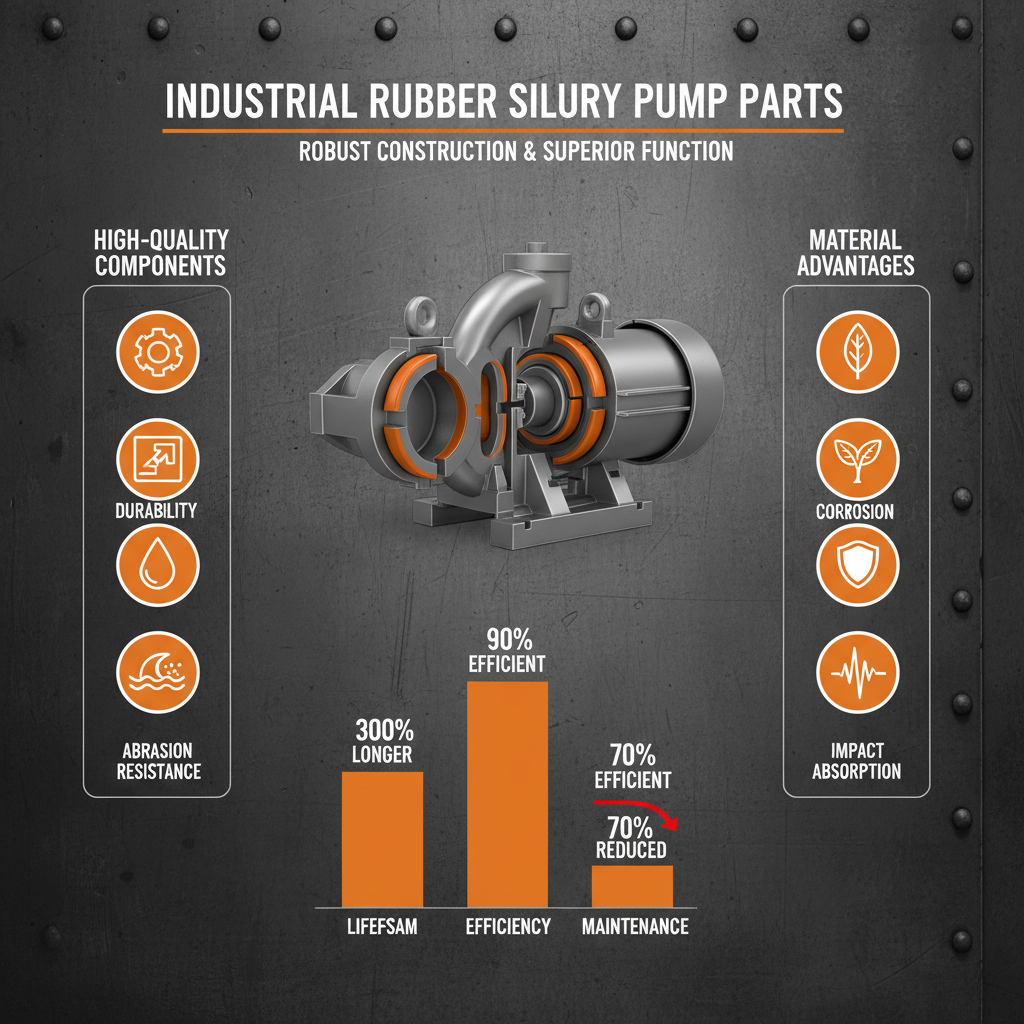
When comparing different configurations—such as Vertical Slurry Pumps versus Medium-Sized horizontal units—the trade-off typically involves suction lift capabilities versus ease of maintenance. The following data illustrates the relative effectiveness of different design focuses across key performance indicators.
In a typical industrial setting, such as a sugar beet processing plant or a sewage effluent station, the slurry often contains organic fibers or soft particles that would be shredded by a standard pump. The CVD range's ability to handle these "soft" particles makes it an ideal choice for low-shear duties where material integrity is paramount.
Similarly, in mineral processing for diamond concentrates or carbon transfer duties, the risk of fracturing the valuable product is a primary concern. By using a vortex-based transfer, operators can move high-density abrasive slurries through the plant while keeping the particle size distribution within strict quality specifications.
The industry is moving toward higher automation and more stringent environmental controls. This is driving a demand for pumps that can operate with minimal intervention and lower energy consumption per ton of material moved. We are seeing a shift toward integrated monitoring systems that can detect wear in real-time.
Material science is also evolving. While hi-chrome materials remain the standard for abrasive resistance, the exploration of titanium alloys and specialized ceramics is expanding the operational limits of slurry pumps, allowing them to handle higher temperatures and more corrosive fluids.
Ultimately, the goal is the "zero-maintenance" ideal. This is being pursued through the optimization of bearing assemblies and the use of self-lubricating stations, which reduce the human error associated with manual lubrication in harsh mining environments.
Choosing the right pump requires a detailed analysis of the slurry's physical properties. Factors such as particle size, abrasive index, and the sensitivity of the material to shear forces dictate whether a standard centrifugal pump or a specialized vortex pump is required.
One common error is over-specifying the pump power, which can lead to excessive velocities and accelerated wear. A more sustainable approach involves selecting a pump with a large volume casing and a recessed impeller, which maintains the required flow while lowering the impact energy of the solids.
When evaluating options, buyers should consider the total cost of ownership (TCO) rather than the initial purchase price. A pump that reduces particle degradation and extends the interval between liner replacements provides significantly higher long-term value.
| Material Characteristic | Primary Risk | Recommended Design | Key Metric |
|---|---|---|---|
| High Abrasivity | Casing Erosion | Hi-Chrome Heavy Duty | Liner Life |
| Fragile Particles | Material Breakage | Vortex Recessed Impeller | Particle Integrity |
| Large Solids/Fibers | Frequent Blockage | Equal Inlet/Outlet Size | MTBF (Clogging) |
| High-Viscosity Slurry | Energy Loss | Medium-Sized High-Torque | Flow Efficiency |
| Deep Sump Access | Shaft Stability | Vertical Spindle Range | Submerged Depth |
| Corrosive Slurries | Chemical Attack | Ti-Alloy Construction | Corrosion Rate |
The primary difference lies in the impeller design and energy transfer. A standard centrifugal pump uses a high-speed impeller that forces fluid outward, often creating high shear that can break particles. A vortex pump, like the CVD series, uses a recessed impeller to create a swirling vortex. This moves the medium more gently, significantly reducing particle degradation and the risk of blockages for larger or softer solids.
Casing volume is inversely proportional to fluid velocity. A large volume casing reduces the speed at which abrasive particles strike the inner walls. By lowering these velocities, the rate of erosion is decreased, which extends the intervals between maintenance cycles and reduces the overall wear on the wet-end components, particularly in heavy abrasive duty applications.
The choice depends on the installation environment. Vertical pumps are ideal for sump applications where the pump must be submerged to handle spillage or deep-pit drainage. Horizontal pumps are generally preferred for inline processing and are often easier to access for routine bearing maintenance. Ensure the shaft length and bearing support are rated for the specific configuration's stress levels.
Yes, they are specifically engineered for this. The combination of an unlined all-metal design and the vortex energy transfer ensures that the abrasive particles are moved without excessive impact. This prevents the pump from wearing out prematurely while simultaneously protecting the valuable mineral particles from being crushed during transport.
Equally sized passages eliminate the "venturi effect" or bottlenecks that occur in pumps with narrowing outlets. This allows the pump to handle the maximum particle size it was designed for throughout the entire flow path, drastically reducing the likelihood of blockages and ensuring a consistent flow rate even when pumping irregular solids.
Focus on Total Cost of Ownership (TCO). This includes the frequency of impeller replacements, the energy cost per cubic meter of slurry moved, and the cost of unplanned downtime. A pump that offers better particle preservation and higher wear resistance may have a higher initial cost but will save significant capital over 5-10 years through reduced maintenance and higher product yield.
The efficiency of slurry handling is no longer just about moving volume; it is about the precision of material transport. By shifting the focus toward low-shear vortex designs and robust all-metal construction, industrial operators can protect their most valuable assets—both the equipment and the material being processed.
Whether managing mineral concentrates or industrial effluent, the integration of specialized pumping solutions is a strategic investment in operational stability. As the industry evolves toward higher automation and sustainability, selecting equipment based on rigorous technical frameworks will remain the only way to ensure long-term productivity.