Email Us
sales@pumpkingmech.com
The operational efficiency of mineral processing plants depends heavily on the reliability of solids handling equipment. When evaluating mining slurry pump manufacturers, engineers are increasingly shifting focus from simple flow rates to the total cost of ownership, specifically regarding wear-life and seal integrity in abrasive environments.
Maintaining a steady flow of low-density slurries in metallurgical and coal preparation departments presents a unique engineering challenge: balancing high-speed operation with a compact footprint. The primary technical difficulty lies in minimizing shaft deflection and vibration while preventing the ingress of abrasive particles into the bearing housing, which can lead to catastrophic pump failure.
This analysis examines the architectural requirements of cantilevered centrifugal slurry pumps and provides a technical framework for selecting equipment based on slurry density and abrasive characteristics. We will explore how specific design features, such as centrifugal shaft seals and interchangeable liners, optimize performance in challenging mining applications.


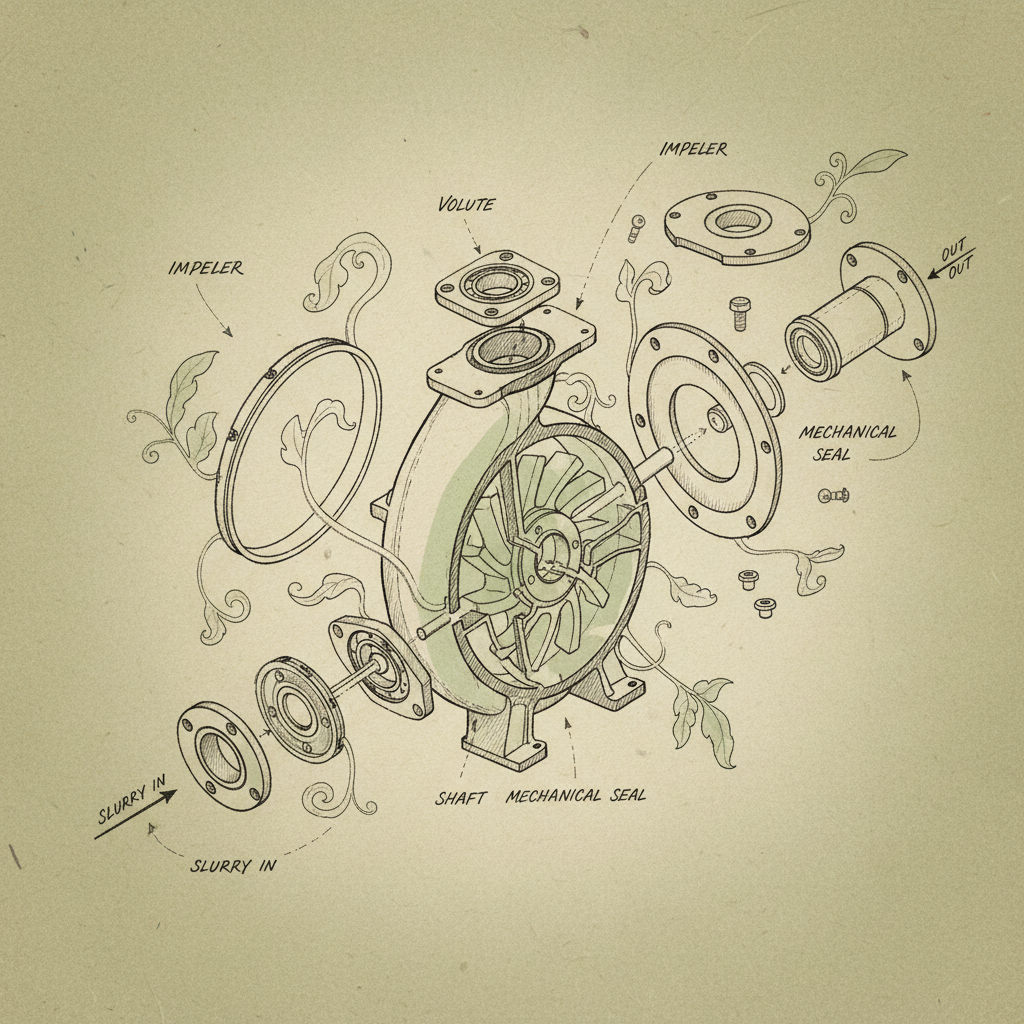
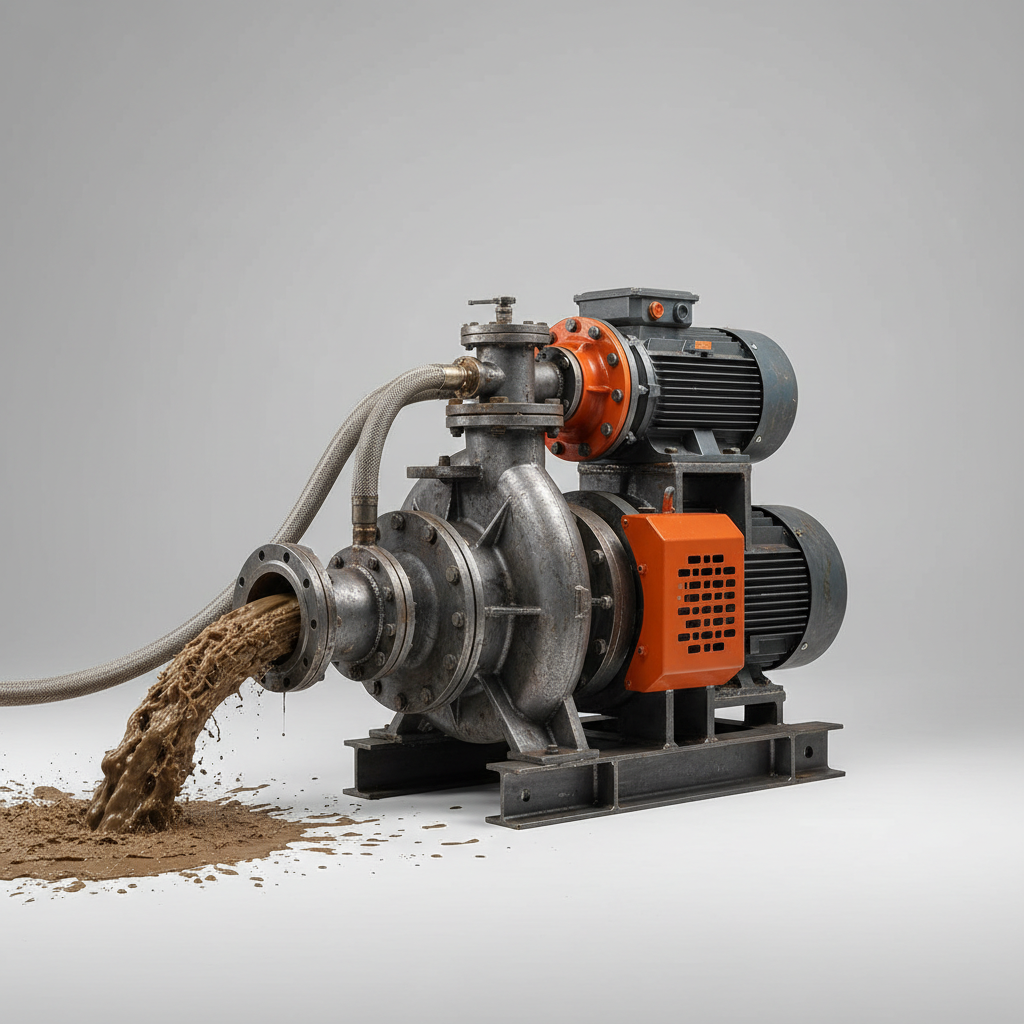
The Type WAD pump is engineered as a cantilevered, horizontal, centrifugal system. This specific architecture is designed to deliver low-density slurries across metallurgical, mining, and coal departments. By utilizing a cantilevered shaft, the design reduces the number of bearings in direct contact with the abrasive medium, thereby extending the mean time between failures (MTBF).
The structural integrity is supported by split outer casing halves made of cast or ductile iron. These casings house interchangeable wear liners, allowing operators to switch between moulded elastomer and hard metal depending on the abrasive nature of the pumped material.
Effective pump selection requires an understanding of the relationship between impeller geometry and fluid dynamics. In high-speed, small-volume operations, the goal is to maximize flow efficiency while minimizing the floor area required for installation. This is achieved through a high-RPM design that maintains necessary head pressure without requiring oversized casings.
The use of deep side sealing vanes is a critical specification for reducing recirculation. By minimizing the amount of slurry that leaks back from the discharge side to the suction side, the pump maintains a more stable flow profile, which reduces turbulence and subsequent erosive wear on the internal walls.
Furthermore, the integration of cast-in impeller threads is a specific design choice for slurry handling. Unlike smooth threads, cast-in threads provide better structural bonding and resistance to the scouring action of heavy particles, ensuring the impeller remains securely attached to the shaft during high-torque startup.
The primary point of failure in slurry pumps is the shaft seal. Traditional gland seals require a constant supply of flush water to prevent solids from entering the bearing housing, which increases water consumption and operational complexity.
Vibration is managed through the implementation of a large diameter shaft with a short overhang. This geometric configuration minimizes shaft deflection and ensures that the pump operates within tight tolerance levels. Heavy-duty roller bearings are housed in a removable cartridge, allowing for rapid maintenance and replacement without dismantling the entire pump base.
The selection of liner material is a trade-off between hardness and elasticity. Hard metal liners are essential for high-velocity, sharp-particle slurries where abrasion is the primary wear mechanism. In contrast, moulded elastomer liners excel in applications involving finer particles and lower velocities, as they can absorb the impact of particles.
To evaluate the suitability of different materials, engineers use a normalized performance rating based on typical industrial slurry profiles. This rating helps in determining the optimal replacement cycle for wear parts.
In a representative engineering scenario, these pumps are deployed for moving Alumina, Copper, and Iron ore slurries. The versatility of the Type WAD pump allows it to be integrated into diverse environments, from phosphate and bauxite mining to water sewerage utilities and chemical fertilizer production.
The key to successful deployment is the alignment of the pump base. By using a minimum number of through bolts to hold the casing to the frame, and providing a convenient impeller adjustment point below the bearing housing, operators can maintain peak hydraulic efficiency with minimal downtime.
The industry is moving toward "smart" slurry handling, where real-time wear monitoring sensors are integrated into the pump casing. This transition from scheduled maintenance to predictive maintenance aims to eliminate unplanned outages in critical mineral processing circuits.
Another emerging direction is the development of advanced hybrid liners. These materials attempt to combine the impact resistance of elastomers with the surface hardness of ceramics, potentially extending the service life of impellers in mixed-abrasive environments.
Furthermore, the push for energy efficiency is leading to the optimization of hydraulic profiles. By reducing internal turbulence and optimizing the impeller vane angle, manufacturers are targeting a reduction in the total kilowatt-hour consumption per ton of slurry moved.
Selecting the correct pump configuration requires a detailed analysis of the slurry's physical properties. The following matrix provides a framework for aligning pump features with specific operational requirements.
It is important to note that "Configuration" refers to the material and seal combination chosen for the specific duty, rather than a fixed model number.
This structured approach ensures that the pump is not over-engineered for simple duties nor under-engineered for highly abrasive applications.
| Configuration Type | Material Profile | Seal Arrangement | Recommended Use Case |
|---|---|---|---|
| Basic Duty | Rubber Liner / Cast Iron | Gland Seal | Low-abrasion water utilities |
| Standard Duty | Hard Metal / Ductile Iron | Centrifugal Seal | General mineral tailings |
| High-Abrasive | Hi-Chrome / Hard Metal | Centrifugal Seal | Iron ore / Copper mining |
| Corrosive-Abrasive | Alloy / Specialty Metal | Flush Gland Seal | Chemical fertilizer / Potash |
| Impact-Heavy | Thick Elastomer / Steel | Centrifugal Seal | Coarse coal preparation |
| High-Pressure | Reinforced Metal / Cast Iron | Full-Flow Flush | Deep-well slurry lifting |
A gland seal uses a packing material and typically requires a continuous flow of sealing water to flush out abrasive particles and lubricate the seal. In contrast, a centrifugal seal uses a rotating disc to create a centrifugal force that pushes the slurry away from the shaft, eliminating or significantly reducing the need for external flush water in many low-to-medium density applications.
The choice depends on the particle size and velocity. Rubber liners are superior for fine-particle slurries and lower velocities due to their elasticity and ability to absorb impact. Metal liners, particularly high-chrome alloys, are required for high-velocity applications or when handling coarse, sharp particles that would easily cut through rubber.
Excessive vibration is typically caused by shaft deflection, impeller imbalance, or misalignment of the pump base. To mitigate this, engineers use large-diameter shafts with short overhangs and high-precision roller bearings. Ensuring the pump base is securely bolted and the impeller is correctly adjusted is critical for maintaining stability.
Type WAD pumps are specifically designed for low-density slurries. For high-density or high-viscosity materials, a heavy-duty slurry pump with a different impeller geometry and a more robust motor may be required. Using a WAD pump for high-density materials may lead to cavitation, increased wear, and potential motor overload.
The split casing design allows the pump to be opened without disconnecting the entire piping system in some configurations. It provides direct access to the internal wear liners and impeller, which significantly reduces the time required for inspection and replacement of worn components, thus lowering the overall maintenance downtime.
As liners and impellers wear down, the clearance between them increases, which leads to internal recirculation and reduced efficiency. The impeller adjustment mechanism allows the operator to move the impeller forward to maintain an optimal gap, restoring hydraulic performance without needing to replace parts prematurely.
The selection of equipment from mining slurry pump manufacturers must be driven by a precise match between the slurry's abrasive profile and the pump's material specifications. By prioritizing centrifugal seal technology and cantilevered shaft designs, operators can effectively balance the needs of high-speed operation with long-term mechanical reliability.
Ultimately, the transition toward modular liners and predictive maintenance will define the next generation of solids handling. For those operating in the metallurgical and mining sectors, verifying the alignment of pump specifications with actual site conditions remains the most effective way to ensure operational continuity and reduce long-term expenditure.